In our daily work, we are often asked: what challenge coins are made from. This article explains the main materials used for challenge coins and how to choose the right one for your design.
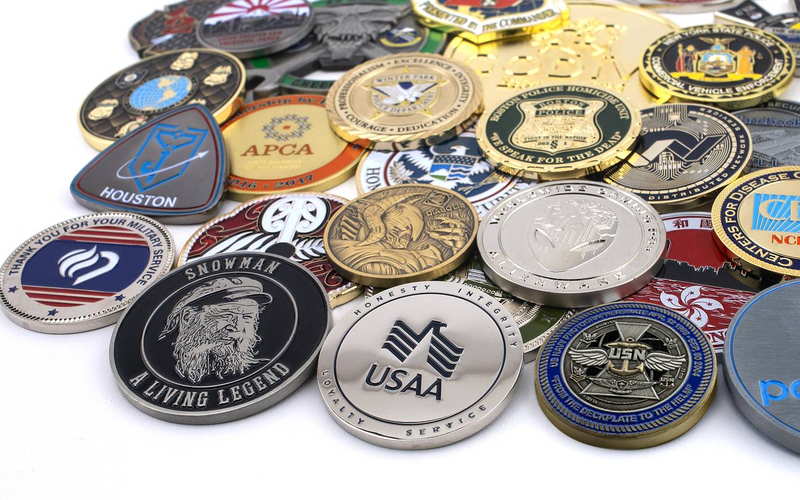
1. What Materials Are Challenge Coins Made Of?
Most custom challenge coins are made from zinc alloy, brass, or iron. Each material can produce a good-looking coin, but they are made in different ways and suit different types of artwork.
Zinc Alloy
Zinc alloy is commonly used for coins with custom shapes, internal cut-outs, or deep 3D details. It is cast into a mold, so it gives designers more freedom with shapes such as shields, Maltese crosses, bottle openers, and spinner coins.
Based on our production experience, zinc alloy works well for complex designs, but very small text and narrow connections near the outer edge need careful artwork review. Very fine lettering can look a little softer on the finished coin, so our designers normally adjust the artwork first and leave enough space around those details.
Brass
Brass gives a coin a heavier and more solid feel. It is a good choice for formal recognition coins, military-style designs, and projects where the weight of the coin matters.
Brass is usually better for regular shapes without internal cut-outs. It can produce clean raised lines and crisp lettering, which is useful when a department badge or logo needs sharp edges.
Iron
Iron is normally used for simple, regular-shaped challenge coins. It is stamped rather than cast, so it works best when the artwork has a straightforward outline and does not need complex 3D relief or internal cut-outs.
For a basic round coin with a simple logo and limited detail, iron can be a practical choice. If the design later changes to include an irregular shape, open areas, or several levels of relief, it should be reviewed again before the material is confirmed.
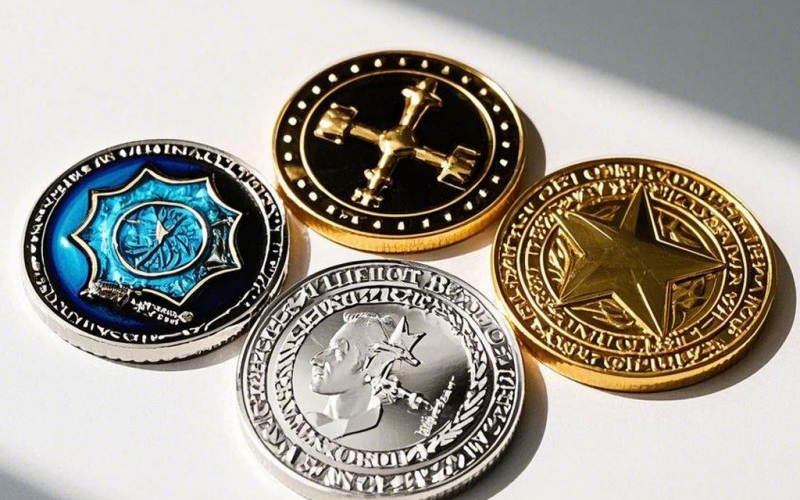
2. Which Challenge Coin Material Fits Your Design?
The right material depends on the shape, level of detail, size, and thickness you need. Before we recommends a material, the design team checks whether the artwork has cut-outs, 3D details, very small text, or an irregular outline.
| Material | Process | Best For | Main Limitation |
|---|---|---|---|
| Zinc Alloy | Casting | Custom shapes, cut-outs, and deep 3D relief | Fine text needs careful artwork review |
| Brass | Stamping | Heavier feel and crisp raised details | Best suited to regular shapes without cut-outs |
| Iron | Stamping | Simple, regular designs | Not suited to deep 3D relief or cut-outs |
Choose Zinc Alloy for Cut-Outs, 3D Relief, or Irregular Shapes
Choose zinc alloy when the coin has an irregular shape, internal cut-outs, deep 3D details, or a larger size. At PinsFun, zinc alloy challenge coins can be made from 0.5 to 6 inches, with thicknesses from 1.0 to 10 mm.
Because it handles both simple artwork and more complicated structures, zinc alloy is used for many types of coins, including corporate challenge coins, military challenge coins, police challenge coins, firefighter coins, and event coins. It gives more flexibility for designs such as spinner coins, bottle opener coins, Maltese crosses, shields, or large commemorative coins.
For fine text and small logos, we checks the artwork carefully before production and leaves enough space around the details.
Choose Brass When You Want a Heavier Coin With Crisp Details
Choose brass for a regular-shaped coin without internal cut-outs when you want a heavier feel and cleaner raised edges. At PinsFun, brass challenge coins can be made from 1 to 3 inches, with thickness options of 1.5, 2.0, 3.0, and 4.0 mm.
This is a good route for formal recognition coins, military-style coins, and department designs with a detailed badge or small lettering that needs to look sharp.
Choose Iron for a Simple, Regular Design
Choose iron when the design is simple, regular in shape, and does not need cut-outs or deep 3D relief. At PinsFun, iron challenge coins can be made from 1 to 2.5 inches, with 2.0 mm and 3.0 mm thickness options.
Iron works well for a basic round coin with a simple logo, limited text, and straightforward raised details. If the design becomes more complex later, we will review it again and may recommend zinc alloy instead.
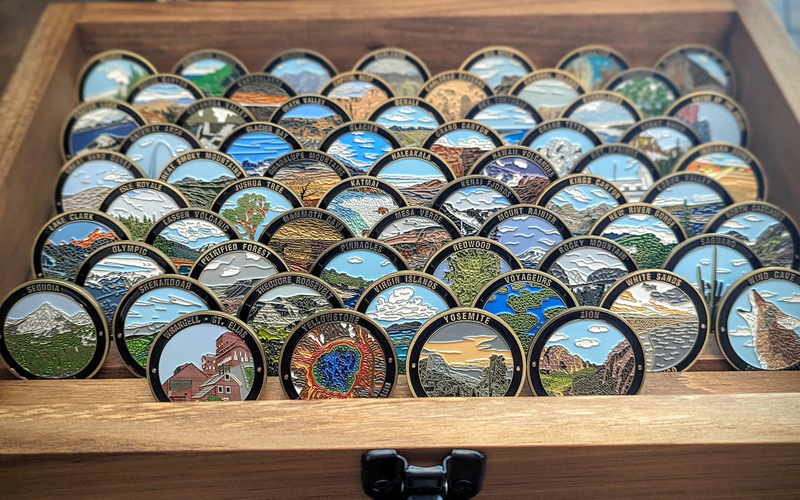
3. Common Material Mistakes to Avoid
The material should support the design, not limit it. These are the issues we most often sees when customers choose a material too early.
Treating Plating as the Coin Material
Gold, silver, black nickel, and antique finishes are plating effects, not the base material of the coin. A coin may be made from zinc alloy, brass, or iron and then finished with gold or silver plating.
Choose the base material first based on the design structure. Then choose the plating based on the look you want.
Using a Detailed Design on a Coin That Is Too Small
A small coin does not leave much room for a department badge, fine lettering, several symbols, and a long message. A 25 mm coin can work for a simple design, but it is not the right choice for a detailed police badge, military insignia, or corporate logo with small text.
If the artwork has many details, use a larger size or simplify the design before confirming the material.
Choosing the Material Before Reviewing the Artwork
Customers sometimes choose brass or iron first because they want a certain look, then later add a custom shape, cut-outs, or deep 3D details. That can change the best production route.
PinsFun recommends reviewing the full artwork before confirming the material. The shape, size, thickness, text size, edge details, and 3D structure all need to work together.
4. Conclusion
The best challenge coin material is the one that fits the artwork. Choose zinc alloy for complex shapes and 3D details, brass when weight and crisp edges matter, and iron for simple regular designs. Review the final artwork before confirming the material so the finished coin looks the way you expect.
5. Frequently Asked Questions
What Material Is Best for a Custom-Shaped Challenge Coin?
Zinc alloy is usually the best choice because casting supports irregular outlines, internal cut-outs, and deep 3D relief. PinsFun still reviews the artwork before confirming the material.
Does Gold or Silver Plating Mean the Coin Is Solid Gold or Silver?
No. Gold and silver are surface plating options. The base coin is normally made from zinc alloy, brass, or iron.
Which Material Is Better for Small Text and Fine Logo Details?
Brass often produces crisp raised lines on a regular-shaped coin, but material alone does not decide the result. PinsFun also checks the text size, coin size, artwork spacing, and production method.
Can We Use Different Materials for the Same Challenge Coin Design?
Sometimes. A simple, regular design may work in zinc alloy, brass, or iron, but cut-outs, irregular outlines, and deep 3D relief may require zinc alloy. We reviews each version before confirming production.