
As a custom medal manufacturer, I want to show you how a medal is made. In this article, I will take you through each step, from preparing the artwork and making the mold to plating, coloring, ribbon assembly, and final inspection.
| Production Stage | What Happens | What the Buyer Should Confirm |
|---|---|---|
| Artwork | The design is prepared for production. | Text, size, colors, and ribbon |
| Tooling | The mold or die is made. | All design details before tooling begins |
| Forming | The medal is cast or stamped. | The production method suits the artwork |
| Finishing | The medal is polished and plated. | Plating and surface appearance |
| Coloring | Enamel or printing is added. | Color placement and small details |
| Assembly and QC | The ribbon is attached and the medals are inspected. | Final specification and quantity |
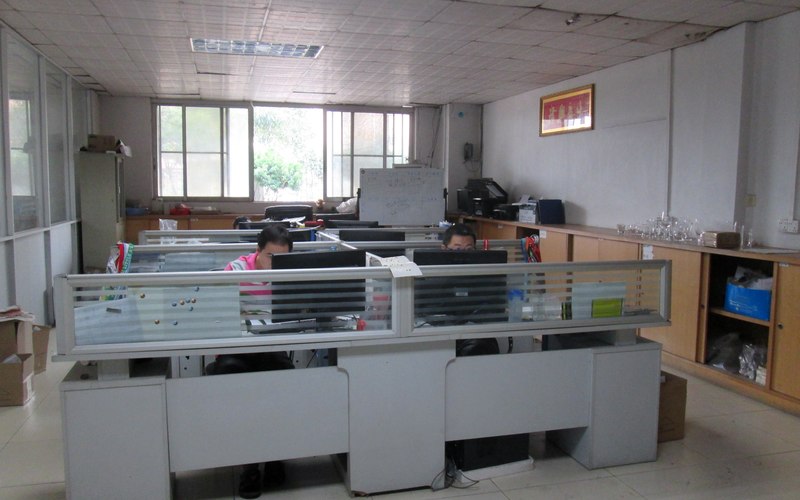
Step 1: Review the Design and Prepare the Production Artwork
Before we make the mold, we check the customer’s design carefully. A common problem is that the artwork looks clear on a computer screen but becomes crowded at the actual medal size. We check the small text, thin lines, cutouts, and other details. If something may not come out clearly, we suggest changing it before production.
We also confirm the medal size, thickness, shape, front and back design, plating, colors, and ribbon. These details are then marked on the production artwork.
We send the production artwork to the customer for approval before making the mold. Please check the logo, wording, date, colors, and dimensions carefully. Once the mold has been made, changing these details may require a new mold.
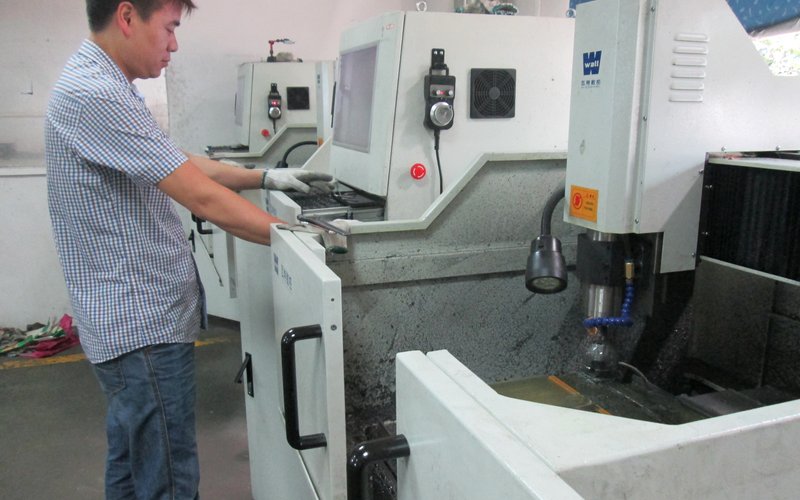
Step 2: Create the Mold or Die
After the production artwork is approved, we use it to make the mold or die. Zinc alloy medals are made with a casting mold. Iron and brass medals use a steel die for stamping. We choose the method according to the material, shape, cutouts, and level of relief in the design.
The approved design is engraved into the tooling by CNC. For a 2D medal, the tooling creates the raised and recessed metal areas. For a 3D medal, it also forms curves, slopes, and different relief heights. The mold must reproduce the small lettering, edges, and 3D details clearly before it can be used for production.
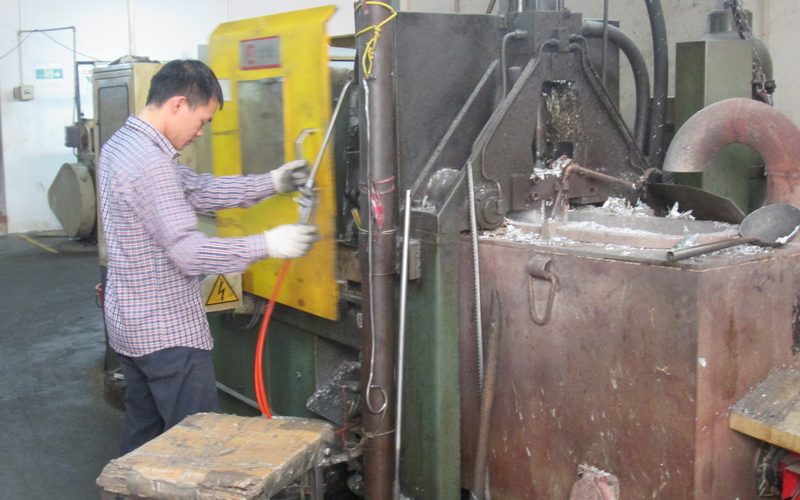
Step 3: Form the Medal
Once the tooling is ready, we make the raw medal bodies. The forming method depends on the material and structure of the design. At PinsFun, we make this choice after reviewing the actual artwork.
Die Casting Zinc Alloy Medals
For zinc alloy medals, the metal is melted and injected into the casting mold. After it cools, the raw medal is removed and the extra metal is trimmed away. We normally use this method for complex shapes, deep relief, cutouts, and 3D designs because the metal can flow into areas that are difficult to form by stamping.
Die Striking Iron or Brass Medals
For iron or brass medals, a press stamps the design into flat metal. The medal outline is then cut to shape. This method works well for regular shapes and 2D designs with clear raised lines and recessed areas. If an iron medal is larger than 2.5 inches or has complex cutouts, we normally review the design for zinc alloy instead.
Before full production continues, we check the first finished pieces against the approved artwork. This helps us confirm the relief, small text, edges, plating direction, and color areas before the remaining quantity is completed.
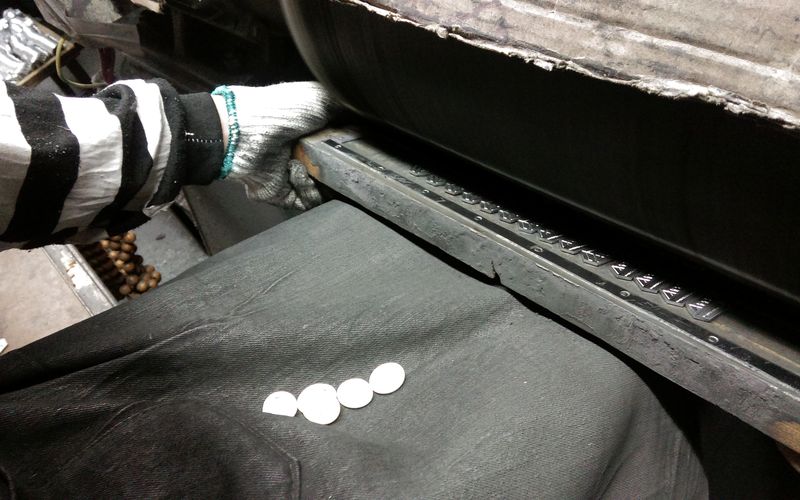
Step 4: Trim and Polish the Medal
Newly formed medals may still have extra metal, rough edges, or small marks from casting or stamping. We trim the extra metal, smooth the edges, and polish the surface before plating.
Any scratch or rough area left on the raw medal may still be visible after plating. Flat 2D medals can usually be polished by machine. Deep 3D relief and narrow cutouts need more careful polishing so the edges and small details are not rounded off.
Step 5: Apply the Plating
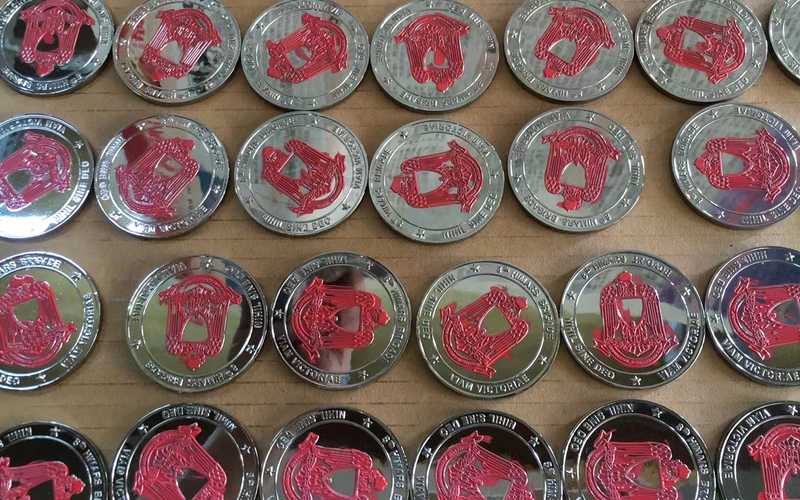
Before electroplating, the medals are cleaned to remove oil and polishing residue. They are then plated in the selected finish, such as gold, silver, copper, black nickel, or an antique finish. The plating changes the surface color, but the base material remains zinc alloy, iron, or brass.
The plating color has already been confirmed on the production artwork before production begins. At this stage, we plate the medals according to the approved specification. For an antique finish, darker color remains in the recessed areas, while the raised areas are polished to make the design clearer.
Step 6: Add Enamel Color or Printing
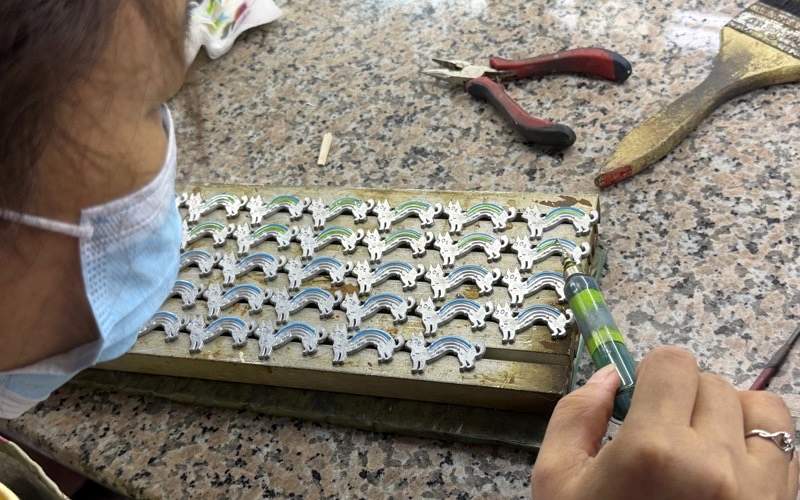
Some medals only need a metal finish, so they can move to the next step after plating. If the design uses soft enamel, workers fill each recessed area with the approved color and cure the enamel before checking the color placement and surface. Raised metal lines keep the colors separated.
As a practical starting point, we normally keep each enamel color area at least 2 mm wide, although the final limit still depends on the shape and surrounding metal lines. Very small spaces are difficult to fill cleanly. If the artwork contains gradients, photographs, or very small details, UV printing is usually a better choice because it does not need a metal border around every color.
Step 7: Attach the Medal Ribbon
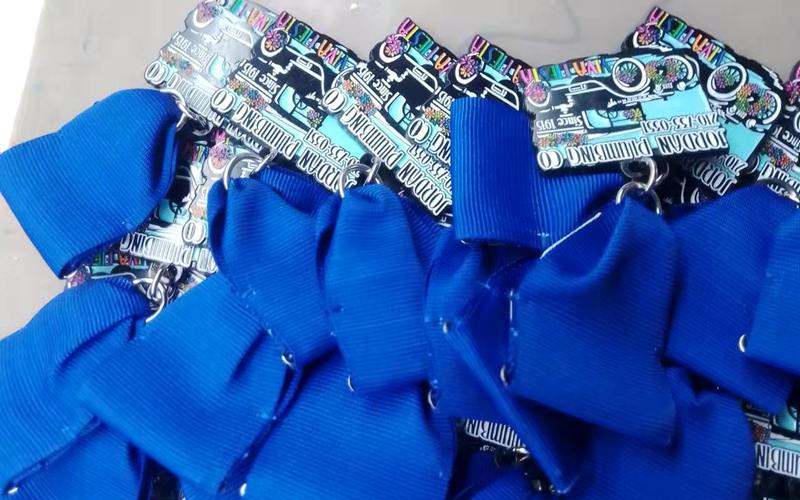
The medal ribbon is made separately and attached after the medal body is finished. One common method is to sew the straight ribbon into a V shape and connect it to the medal with a small jump ring.
The other method is to pass the ribbon directly through a slot at the top of the medal. This does not need an extra connector. When we prepare the production artwork, we confirm the slot size and ribbon width together so the ribbon fits correctly.
Step 8: Inspect and Pack the Finished Medals
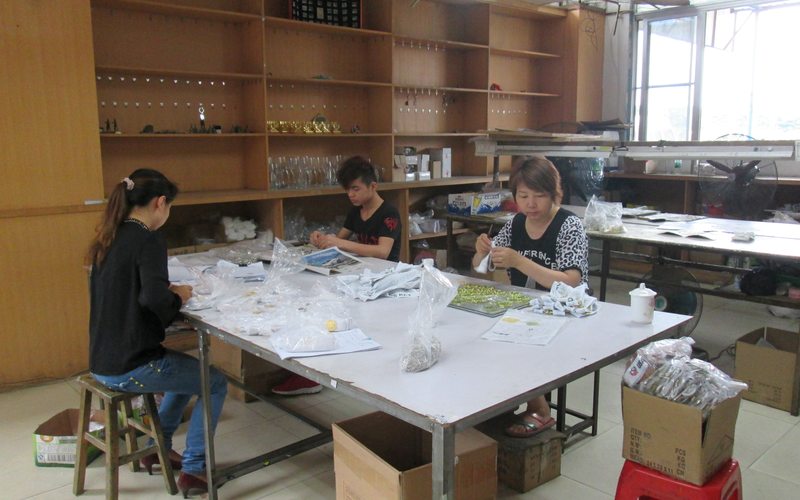
Before packing, we compare the finished medals with the approved production artwork. At PinsFun, we check the size, thickness, shape, plating, color placement, text, surface, and ribbon assembly. Medals with scratches, plating flaws, missing color, or incorrect details are separated before packing.
The medals are then counted and packed according to the order. The package protects the medal surface and keeps the ribbon tidy during shipping. After the quantity and cartons are checked, the order is ready for shipment.
9. Conclusion
Custom medal production moves through artwork preparation, mold making, forming, polishing, plating, coloring, ribbon assembly, and inspection. The most important work happens before the mold is made: the design must be clear, correctly sized, and suitable for the chosen production method. Careful checks at each stage help the finished medals match the approved artwork.
10. Frequently Asked Questions
Are Custom Medals Cast or Stamped?
Custom medals can be either cast or stamped. At PinsFun, we normally die cast zinc alloy medals for complex shapes, deep relief, cutouts, or 3D details. Iron and brass medals are normally die struck for regular shapes and clear 2D artwork. We confirm the suitable method after reviewing the design.
Can I Change the Design After the Mold Is Made?
You can request changes, but some changes may require new tooling after the mold or die has been made. Check the wording, date, dimensions, relief, colors, and ribbon carefully on the production artwork before approval.
How Is Color Added to Custom Medals?
Soft enamel color is filled into recessed areas and cured, while raised metal lines separate the colors. Designs with gradients, photographs, or very small details are usually better suited to UV printing.