
Fire departments often order challenge coins for academy classes, retirements, station milestones, and memorial events. Each coin carries details that matter to the people receiving it. This article explains what a firefighter challenge coin is, how departments use it, and how the design usually comes together.
1. What Is a Firefighter Challenge Coin?
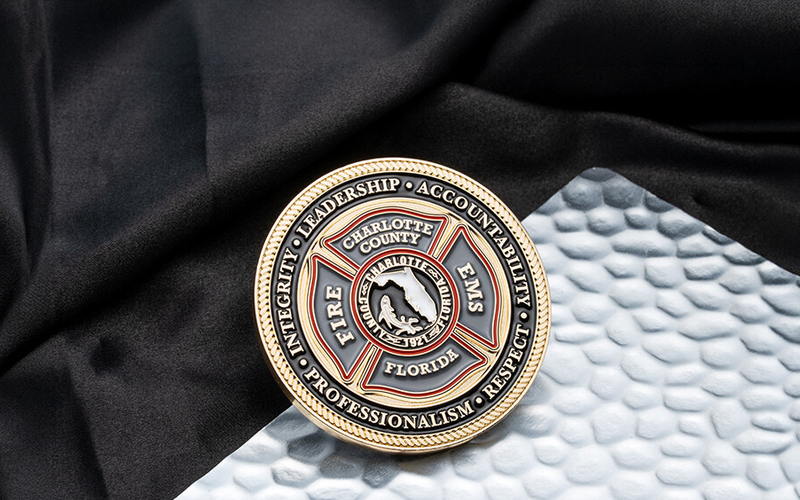
A firefighter challenge coin is a custom metal coin made for a fire department, station, academy class, or specialist rescue team. It is not a coin people spend. It is something members keep because it connects them to a crew, a place, or a moment in their service.
Most departments begin with the part that already belongs to them: the department badge, station number, apparatus name, or local symbol. Then they add the reason for the coin, such as a graduation year, a retirement date, or a memorial message.
When a department sends us its badge artwork, we do not treat it as a simple logo. Fire-service badges often contain small lettering, stars, outer rings, and several layers of detail. Those details need to be checked early, especially when the coin also needs a unit name or a long message. A clear design usually means deciding what people should notice first, rather than trying to place every department detail on one coin.
2. What Are Firefighter Challenge Coins Used For?
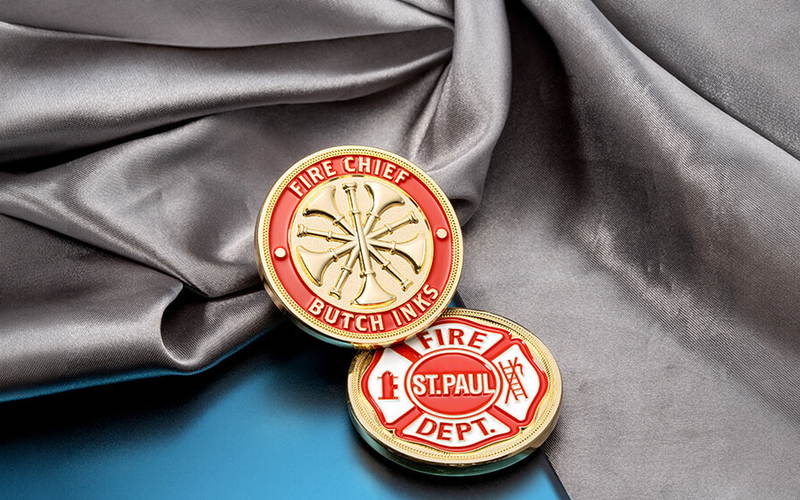
The event behind the coin usually tells us what information belongs on it. A coin for an academy class, for example, needs different details from one made for a retiring captain or a station anniversary.
Academy Graduation
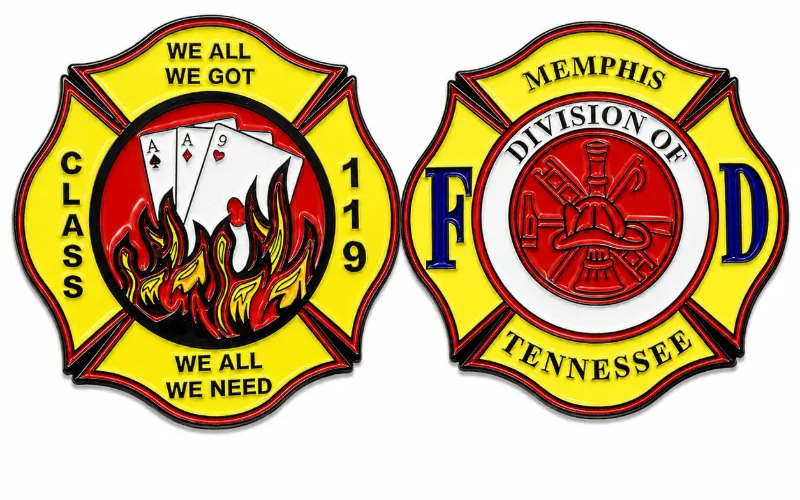
Academy coins are normally made for one graduating class. The class number, academy name, year, and department badge are the details graduates will look for years later.
A common mistake is trying to add every training subject, instructor name, and class slogan to the same coin. It quickly becomes crowded. In artwork review, we usually suggest keeping the academy identity on one side and the class number or graduation details on the other. That gives the coin a cleaner layout and makes the small lettering easier to read.
Promotion and Retirement
A promotion coin may mark a new rank, officer appointment, or transfer into a leadership role. The department badge still matters, but the new rank or role should have a clear place in the design.
Retirement coins are more personal. A name, rank, years of service, and station or apparatus number are often enough to make the coin feel like it belongs to that firefighter. If the person spent many years with one crew, that station detail can mean more than a large general department logo.
Memorial Events
Memorial coins are made to remember a firefighter, a line-of-duty death, or an important date for the department. They may be given to family members, fellow firefighters, or people attending a remembrance event.
For this type of coin, wording needs extra care. Names, badge numbers, and service dates should be checked closely before artwork approval because they cannot be corrected after production. We also recommend keeping the message short. A name, date, and a few words of remembrance usually have more impact than a full paragraph in very small text.
Station Anniversary
Station anniversary coins are often made for a department’s founding year, the opening of a station, or a major milestone such as a 50th or 100th anniversary.
This is where local details work best. Some departments use the station building, an older badge, or a historic apparatus number. If a building image is included, it usually needs to be simplified before it is made in metal. Very thin windows, brick lines, and small signs may look good in a photograph but can become unclear on a coin. A strong outline of the building often works better.
Fundraising and Community Events
Departments may also create coins for charity events, open houses, fire prevention programs, or community fundraisers. These coins are often received by local residents, supporters, and families, not only firefighters.
That changes the design approach. The department name and the event should be easy to understand at a glance. One strong fire-service image, such as a helmet, engine, or hydrant, is usually enough. If the event supports a specific cause, make that cause visible instead of filling the coin with general department information.
Special Units and Rescue Teams
Many departments have teams with their own work and identity, including hazmat, dive, wildland, EMS, technical rescue, and search-and-rescue units. A unit coin gives those members something that reflects their role without losing the connection to the main department.
The department badge can stay on one side. The other side can focus on the unit name and a symbol that makes sense for the work. For example, a dive team may use water or diving equipment, while a wildland crew may use a fire line or mountain outline. The design should show what the team actually does, not simply repeat the same general fire-service graphics.
3. Common Firefighter Challenge Coin Design Ideas
A good firefighter coin usually has one clear identity, one reason for being made, and a few details that members recognize. The strongest designs are not always the busiest ones.
Fire Department Seal or Badge
The department seal or badge is usually the starting point. It gives the coin an official connection to the department and makes it immediately recognizable to members.
During artwork review, we pay close attention to the small text around the badge and the space between the logo and the outer edge of the coin. If a logo sits too close to the border, or if the lettering is too fine, the edges may not look as clean in the finished metal coin. Giving the badge a little more room often improves the final result.
Maltese Cross and St. Florian Cross
The Maltese cross is one of the most familiar firefighter symbols. It can be the shape of the coin, sit behind the department badge, or be used as a smaller design element.
A St. Florian cross can work in the same way. These symbols are useful when the coin needs to feel traditional and clearly connected to the fire service. If the department wants an irregular cross-shaped coin or a design with cut-out areas, that should be confirmed at the beginning because the outline affects how the coin is made.
Station Number and Unit Name
Station numbers and apparatus names make a coin feel personal to the crew receiving it. “Station 7,” “Engine 4,” or “Rescue 1” may be a small part of the layout, but it is often the first detail members look for.
Long unit names need more planning. Instead of squeezing them around a detailed badge, it is often better to give them their own side of the coin. This also leaves enough room for the lettering to stay readable.
Axes, Helmets, Ladders, Hydrants, and Fire Trucks
Firefighting equipment can help tell the story behind a coin. An axe or helmet works well for a general department design. A ladder truck or old engine may suit a station anniversary. Rescue tools make more sense for a technical rescue coin.
We normally suggest choosing the images that support the purpose of the coin. A retirement coin may need a station or apparatus detail. A wildland team coin may need a landscape or fire line. Adding every familiar firefighter symbol at once makes the design look crowded and weakens the main message.
Thin Red Line and Memorial Text
The Thin Red Line is often used on memorial coins and service-recognition designs. It can be a narrow background stripe or a small color detail near the badge.
If a department needs a specific red tone, it is best to provide the Pantone reference during artwork confirmation. Screen colors and the finished metal surface can look different, and raised or recessed areas can make plating appear lighter or darker. For memorial wording, keep the text brief and make sure the most important details, such as the name and dates, have enough space to remain clear.
4. Frequently Asked Questions
What Does It Mean When a Firefighter Gives You a Challenge Coin?
It usually means the firefighter or department is recognizing your service, help, or connection to the team. The exact meaning depends on the occasion, such as an academy graduation, retirement, memorial event, or shared response.
Is Receiving a Firefighter Challenge Coin a Big Deal?
Yes. These coins are usually given for a specific reason, so their value comes from who presented the coin and what the occasion meant. It may recognize service, mark a department milestone, or show that someone is accepted and respected by the team.
Do Firefighters Carry Challenge Coins?
Some firefighters carry a coin, while others keep it in a locker, display case, or personal collection. Carrying one is a personal choice, although some crews also follow the informal coin-check tradition.