
Military patch placement is not one universal rule. It depends on the service branch, the uniform style, the type of insignia, and whether the patch is for a current unit, former wartime service, a flag, or another authorized purpose.
This guide focuses on shoulder patches worn on U.S. Army combat uniforms and the Army Green Service Uniform. Other branches follow different rules. Check your branch's current guide before attaching a patch.
1. Start With the Uniform, Not the Patch
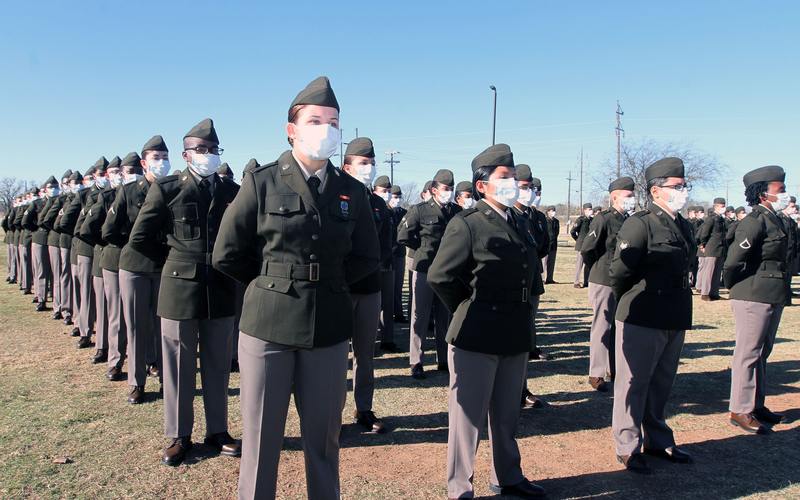
Before attaching any patch, identify the uniform first. An Army Combat Uniform in OCP and an Army Green Service Uniform do not use the same placement method.
Many people find a photo online, see a patch on a sleeve, and assume the same position works on every jacket. It does not. A patch can be correct for one uniform and wrong for another.
You also need to confirm what the patch represents. A current unit patch, a former wartime service patch, and a U.S. flag patch do not go in the same place.
2. U.S. Army Combat Uniform Patch Placement
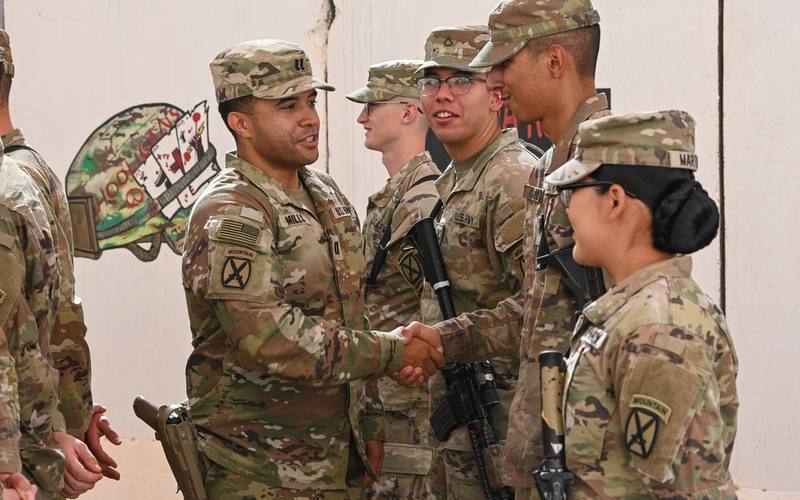
ACU stands for Army Combat Uniform. OCP means Operational Camouflage Pattern, the camouflage used on the uniform. The shoulder patches covered here attach to designated hook-and-loop areas.
| Patch | Location on the Army ACU | Key Check |
|---|---|---|
| Current Unit Patch | Left sleeve | Center on the designated hook-and-loop pad. |
| Authorized Combat Patch | Right sleeve, below the flag | Confirm wear authorization and center within the prescribed area. |
| U.S. Flag Patch | Right shoulder pocket flap | Place at the top of the pad, with stars facing the wearer’s front. |
U.S. Flag Patch
On the ACU, the U.S. flag is worn on the right shoulder pocket flap. It sits at the top of the hook-and-loop area.
The star field faces forward, toward the wearer's front. From the observer's view, the stars appear on the right side of the flag. This creates the effect of a flag moving forward with the wearer.
Use the hook-and-loop attachment for the U.S. flag patch. Army guidance prohibits sewing either the full-color or tactical flag onto the utility uniform.
Current Unit Patch
The current unit shoulder sleeve insignia, or SSI, goes on the left sleeve of the ACU. Center it on the designated hook-and-loop pad.
The patch must belong to the soldier's authorized current organization. A similar-looking patch, an old unit patch, or a patch bought as a souvenir is not automatically permitted.
Combat Patch and SSI-MOHC
The Army calls the combat patch Shoulder Sleeve Insignia–Military Operations in Hostile Conditions, or SSI-MOHC. You may also see the older term, former wartime service patch. An authorized wearer may wear it on the right sleeve.
On the ACU, center the subdued combat patch below the flag. Keep it centered from side to side and within the space between the flag and the bottom of the sleeve pocket. Do not sew it onto the combat uniform. If you qualify for more than one, you may choose one to wear or leave it off. See DA PAM 670-1, Sections 21–17 to 21–19.
3. U.S. Army Green Service Uniform Patch Placement
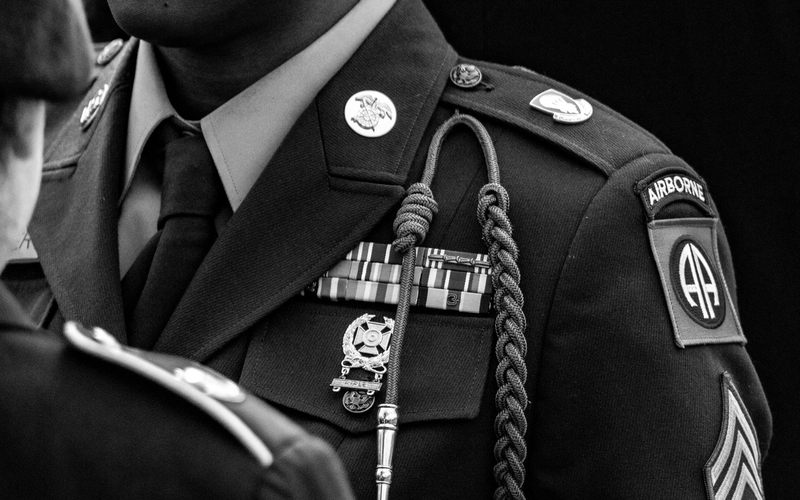
The Army Green Service Uniform, or AGSU, has a more formal appearance. Its shoulder sleeve insignia is sewn or otherwise permanently attached in a measured position, rather than placed on hook-and-loop panels.
The current unit patch is worn on the left sleeve. An authorized SSI-MOHC is worn on the right sleeve.
The basic AGSU position is centered on the sleeve, 1/2 inch below the top of the shoulder seam. If you wear authorized tabs above the left unit patch, check the separate tab placement instructions before sewing. See DA PAM 670-1 for sleeve and tab diagrams.
Do not use an OCP placement photo as a guide for an AGSU coat. The OCP uniform has hook-and-loop panels and a different layout. The AGSU uses measured placement below the shoulder seam.

4. Check the Current Official Guide Before You Attach a Patch
Uniform rules can change. A guide that was correct for an older uniform may not apply to the current version. Use the Army Uniforms and Grooming Guide to find official guidance and updates.
Before sewing, ordering, or attaching a patch, check these points:
- Which branch and uniform are you wearing?
- Is the patch authorized for your current assignment or service history?
- Does the uniform use a sewn position or a hook-and-loop panel?
- Is the patch full color, subdued, or tactical?
- Does your unit have additional instructions?
For official military uniforms, the service uniform guide is the final reference. A seller's product photo or a social-media image is not enough to confirm placement.
When an official patch is being made for a unit or academy, do not resize the artwork only because a larger patch looks easier to read. The approved drawing, border, color version, and finished size should be checked together. A patch may fit physically on the sleeve but still be the wrong size for that uniform.
5. Choose the Right Patch Backing Before You Order
The patch backing should match the uniform before production starts. A hook-backed patch will not attach to a garment without a matching loop panel.
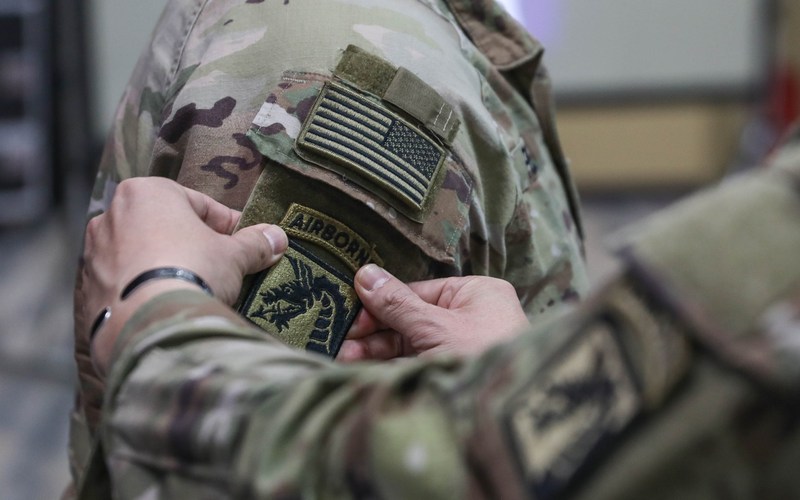
If the uniform already has a loop panel, order a hook-backed patch. The patch can be pressed onto the panel and removed when an authorized insignia needs to be changed. This is common on tactical uniforms, field gear, backpacks, and some hats.
If the uniform has no loop panel, check the required attachment method before ordering. Do not add a panel unless it is authorized.
For a formal uniform that uses a fixed sleeve position, a plain sew-on patch is usually the more practical choice. The patch can be positioned with a ruler, checked against the uniform guide, and sewn in place. Iron-on backing is not a substitute for the required attachment method.
Before ordering, prepare four things: a photo of the uniform, the exact patch location, the size of any existing loop panel, and the backing you need. A correct patch design is not enough if the backing does not match the uniform.
When sourcing custom patches or uniform patches, confirm the approved design and attachment requirements before production.
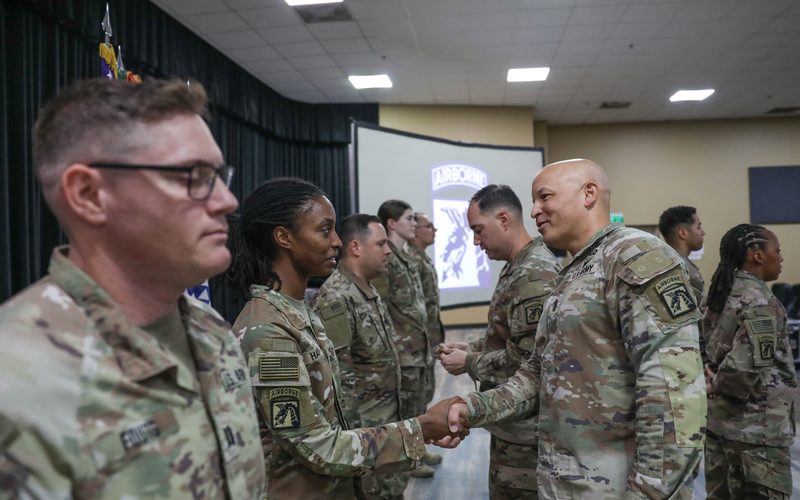
6. Common Military Patch Placement Mistakes
One common mistake is placing a current unit patch on the right sleeve because it looks more balanced with the flag. On U.S. Army uniforms, the right sleeve may have a separate purpose.
Check which color version is authorized for the uniform and the situation. Do not assume full-color unit patches are always prohibited on the ACU. Army Directive 2025-18 allows them when authorized by the commander. Check for later changes before choosing a version. Read Army Directive 2025-18.
People also confuse a patch's production size with its placement rule. A patch may physically fit on a sleeve but still be too large, too small, or not authorized for that position.
If the patch is for a costume, a veteran display, or a private collection, you have more freedom. If it is for an active uniform, follow the current official guidance.
For recreational equipment, airsoft patches are a separate option and should not be confused with authorized military insignia.
7. Conclusion
Military patch placement starts with the uniform and its rules. The Army combat uniform uses designated hook-and-loop areas for the shoulder patches covered here. AGSU shoulder patches use measured positions. Check any tab placement requirements before sewing.
Before ordering and attaching a patch, confirm the branch, uniform type, patch purpose, color version, finished size, and backing. That prevents a patch from being made correctly but still being unsuitable for the uniform.
8. Frequently Asked Questions
Which Sleeve Does a U.S. Army Unit Patch Go On?
A current U.S. Army unit patch is normally worn on the left sleeve.
Which Sleeve Does a Combat Patch Go On?
On U.S. Army uniforms, an authorized combat patch, or SSI-MOHC, goes on the right sleeve. On the ACU, it sits below the flag.
Can I Sew Shoulder Patches onto an Army Combat Uniform?
The unit shoulder patch, SSI-MOHC, and U.S. flag patch attach to the designated hook-and-loop areas. Do not sew these onto the ACU. Name tapes and rank insignia have separate attachment rules.
Are Military Patch Placement Rules the Same for Every Branch?
No. Each military branch has its own uniform rules, patch types, and placement requirements.
Does a U.S. Flag Patch Face Forward or Backward?
On the right shoulder of the U.S. Army combat uniform, the stars face the wearer's front. Order the reverse-side flag for this position. Do not use this example as a placement rule for every uniform.