
When customers send us a logo for custom keychains, one question often comes up: what size should we make it? The design needs enough room to stay clear without making the keychain awkward to carry. This guide explains how to measure keychains and choose a size that suits your design.
1. How Is Keychain Size Measured?
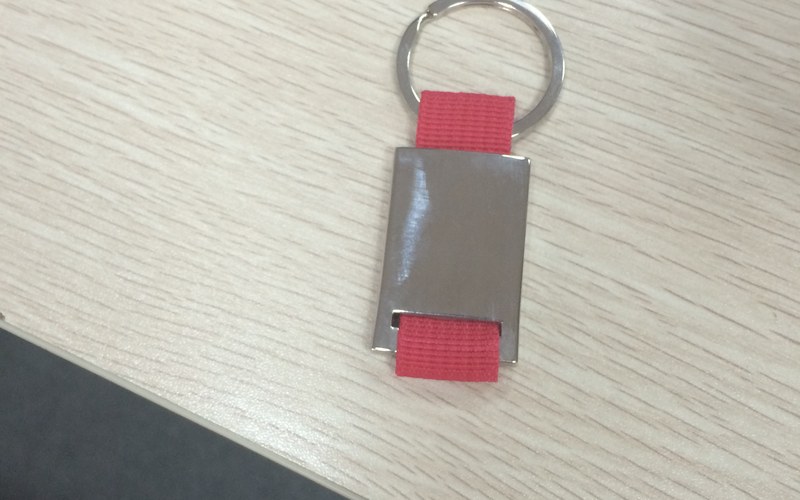
Start with the size of the keychain body, the piece carrying your logo or artwork. The chain and key ring add to the overall length, so those measurements should be shown separately.
In one leather keychain quote, we listed the size as 95 × 25 mm, with the key ring included in the 95 mm length. That was the overall length, not the length of the leather piece alone. When comparing sizes, check what each measurement includes.
For a round keychain, the body size is its diameter. For a rectangular or custom-shaped design, check both the maximum width and height. Suppliers commonly use the longer measurement to describe the size, but that number alone does not tell you how the finished piece will look.
A design measuring 2 inches tall and half an inch wide will look much smaller than a 2-inch square. Both have the same longest side, but they give your artwork very different amounts of space.
Also check whether the quoted dimensions include the border and attachment tab. This matters when you want the finished keychain to match an existing item.
At PinsFun, the artwork we prepare for approval shows the dimensions and attachments, so you can see what the measurements include.
2. Common Custom Keychain Sizes
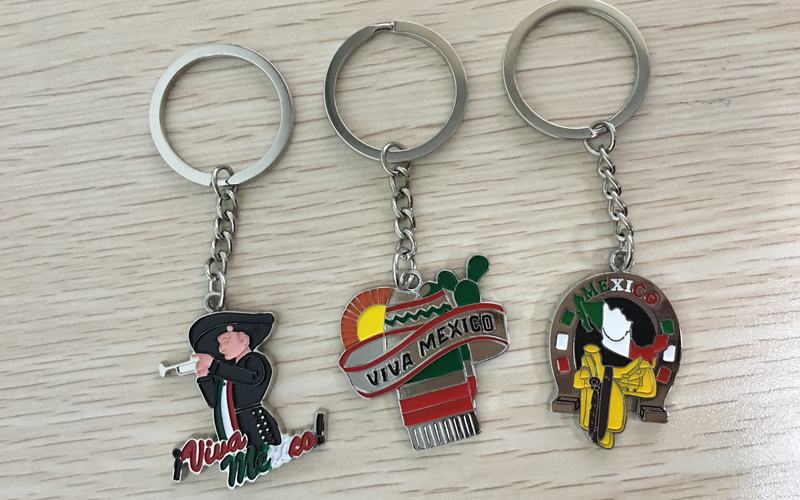
The sizes below give you a starting point for comparing designs. They are reference options, not fixed standards for every material or shape.
| Size | Metric Equivalent | Example Designs to Compare | What to Check |
|---|---|---|---|
| 1.25 inches | 31.75 mm | Initials and simple symbols | Fine lettering may need to be removed or enlarged. |
| 1.5 inches | 38.1 mm | A compact logo or short name | Check the text at actual size. |
| 1.75 inches | 44.45 mm | A logo with a short line of text | Compare the width as well as the longest side. |
| 2 inches | 50.8 mm | Logo-and-text combinations or simple character designs | Look at the smaller details in the layout. |
| 2.5 inches | 63.5 mm | Characters or illustrations that need more room | Compare a full-size cutout with the space it will take up on your keys or bag. |
| 3 inches | 76.2 mm | Larger illustrations and statement bag charms | Compare it with the bag or item it will hang from. |
Send us your design and tell us how the keychain will be used. We can recommend a size based on the intended use and your design.
One small detail can prevent confusion: 2 inches is 50.8 mm, not exactly 50 mm. Either measurement can be used, but the approved artwork should state the dimension you actually want.
3. Choose a Size That Fits How the Keychain Will Be Used
Everyday Keys and Promotional Giveaways
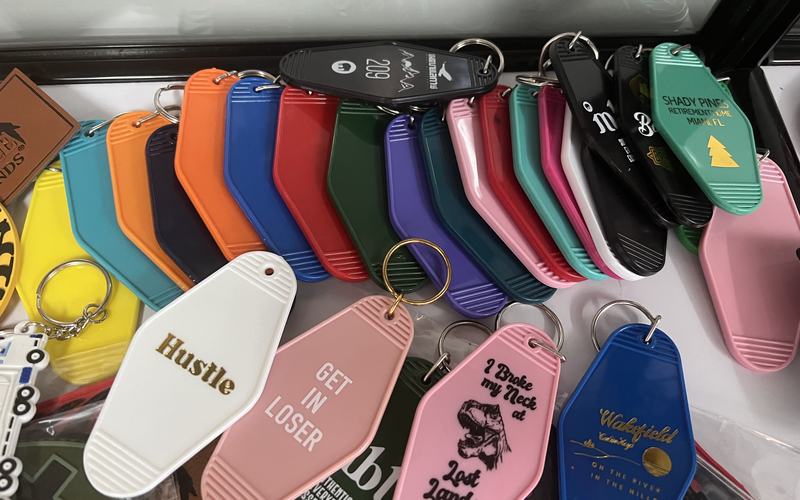
For a keychain that will stay on someone’s keys, think about the complete item sitting in a pocket or being held alongside several keys. Compare it with a keychain you already carry to get a sense of the size.
For company giveaways with a simple logo and a short name, you can start by comparing the smaller options in the chart. Check whether the lettering remains readable before choosing between them.
The material and thickness matter here too. Two keychains with the same width and height can feel quite different. A solid metal piece and a flat acrylic charm should not be judged by size alone.
Tell us whether you want something light for everyday use or a piece with a more substantial feel. That helps us assess the dimensions together with the construction.
Retail Merchandise and Bag Charms
With character merchandise, the artwork is often the reason someone chooses the product. Faces, expressions, and distinctive details need enough room.
Try comparing a 2-inch version with a 2.5-inch version. Look at what actually improves in the larger one. Can you see the expression more clearly? Does the lettering become easier to read?
For a bag charm, place the full-size cutout against the bag. You may want the design to stand out, but seeing it in position will help you judge the proportions.
4. Give Your Artwork Enough Room
Simple Logos and Short Text
A bold symbol usually gives you more freedom to choose a smaller size. Add a company name, website, and slogan, and the same space becomes much harder to work with.
Do not shrink everything just to keep the original size. Decide what the person using the keychain actually needs to see.
For example, the main logo may be clear while the website underneath is barely readable. You could increase the body size, shorten the wording, or leave out the secondary text. The best choice depends on which information matters most.
This is why we need to see the design before recommending dimensions. “A logo keychain” could mean one simple icon or a detailed badge surrounded by lettering.
Detailed Artwork and Custom Shapes
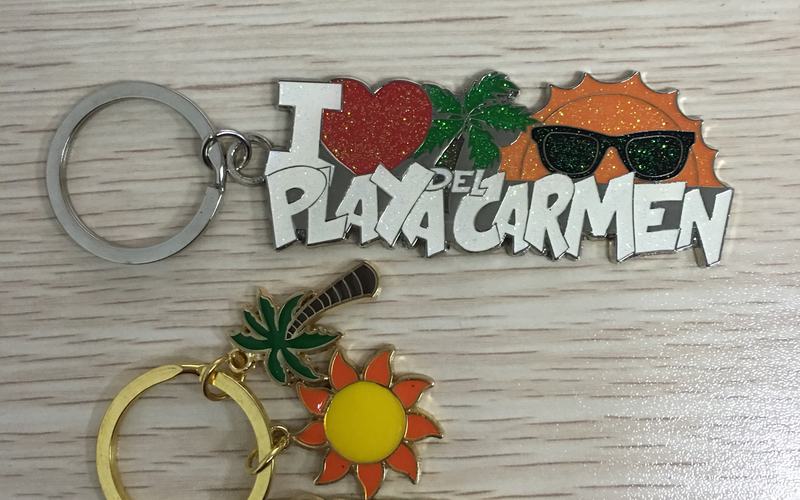
Look closely at the smallest parts of the design, especially facial features, small lettering, and narrow spaces between lines.
One customer sent us a 70 mm keychain sample and wanted to use a new, more detailed logo. After reviewing it, we proposed two options for the PVC version: increase the size to 90 mm and simplify the small details, or keep it at 70 mm and print those details.
We can use printing to reproduce fine details on metal, leather, and PVC keychains. If the details are too small for the original process, changing the process may let you keep the size you want.
For a long, narrow design, adjusting the layout may help more than increasing the length. Moving a line of text or changing its position can give it more room.
Designs with cutouts or thin projecting parts also need a structural check. A tail, narrow bridge, or small connection may need adjustment as the whole design gets smaller.
Send the original artwork rather than simplifying it on your own first. We can review which details need attention and discuss the changes with you.
5. Check the Size Before Production
The simplest size check is a paper printout.
Print the design at 100% scale, with “fit to page” turned off. Measure it with a ruler to confirm the print is correct, then cut around the shape. Put two candidate sizes side by side and compare them with a keychain you already use.
You will quickly notice things that are easy to miss on a large screen. Text may look smaller than expected. A wide shape may take up more room in your hand. Or the larger version may add very little to a simple design.
Before approving production, check these points on the artwork:
• The body width and height.
• Whether the border and attachment tab are included in those dimensions.
• The selected chain, ring, or other attachment, and the overall length where relevant.
• The attachment hole and whether it fits the selected ring or connector.
• The intended hanging direction, especially for horizontal or asymmetric designs.
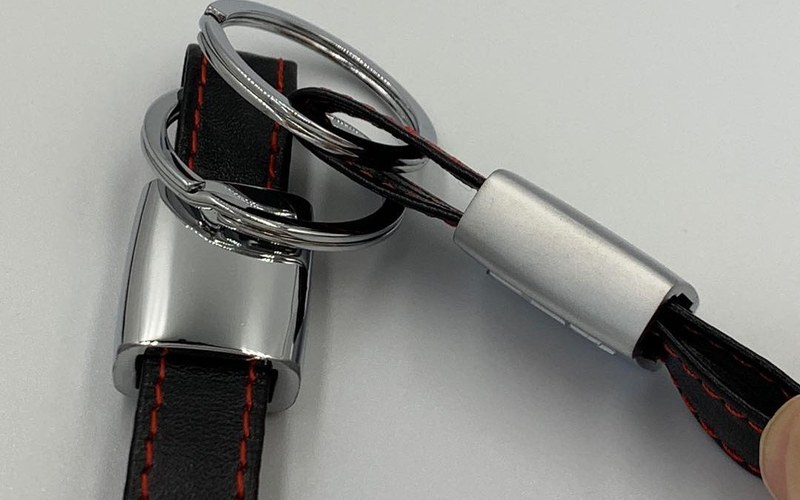
For one metal keychain order, the customer specifically asked for thicker, sturdier fittings and connecting rings. We supplied upgraded heavy-duty hardware. If you have a similar requirement, mention it when you send the design so we can consider the attachment along with the body size.
At PinsFun, we prepare the production artwork after the order is confirmed and include the dimensions, colors, attachments, and plating for approval. Take a moment to check those details together rather than looking only at the logo.
A paper cutout helps you judge size and appearance. It cannot show weight, thickness, or how the assembled keychain moves. Where those qualities matter to your decision, discuss a physical sample before approving the full run.
6. Conclusion
Choose a keychain size around the artwork and how the finished item will be used. Give the important details enough room, then check that the complete piece will be comfortable to carry or display.
Send us your design and tell us how the keychain will be used. We can help you compare suitable sizes and identify any details that need adjusting before production.
7. Frequently Asked Questions
Can I Order a Size Between the Sizes Listed in the Chart?
Yes. Send your preferred dimensions, and we will check them against the design, material, and production method.
Can a Digital Proof Show How Heavy the Keychain Will Feel?
No. A digital proof shows the design and specified dimensions. Use a physical sample to judge weight and feel.